
Sulfur is naturally present in crude oil and can remain in petroleum products after refining. While the amount and form of sulfur vary between crude oils and finished products, controlling sulfur content is an important part of petroleum quality testing.
High sulfur levels can contribute to emissions, affect refining processes, and interfere with some emission-control systems. For this reason, refineries, fuel manufacturers, laboratories, and quality-control teams routinely measure sulfur in crude oil, gasoline, diesel, jet fuel, lubricants, and other petroleum products.
Accurate sulfur analysis in petroleum products helps manufacturers verify product specifications, monitor refining processes, and meet applicable regulatory requirements. Several analytical techniques are available, including X-ray fluorescence (XRF), ultraviolet fluorescence (UVF), combustion-based methods, and other laboratory techniques.
The appropriate method depends on the sample type, sulfur concentration, required detection limit, applicable standard, and laboratory workflow.
Why Is Sulfur Analysis Important in Petroleum Products?
Sulfur is a naturally occurring component of crude oil. During refining, much of the sulfur can be removed or converted into other compounds, but the amount remaining in a finished fuel must often be controlled.
The importance of sulfur analysis comes from several factors.
Environmental and Emission Control
Sulfur in fuel can contribute to sulfur oxide emissions during combustion. Sulfur can also reduce the effectiveness of certain vehicle emission-control technologies.
For example, the U.S. Environmental Protection Agency explains that reducing sulfur in gasoline enables advanced emission-control systems and helps reduce air pollution.
Diesel fuel sulfur has also been progressively reduced under regulatory programs. In the United States, ultra-low sulfur diesel has a sulfur limit of 15 parts per million (ppm) for applicable highway diesel fuel.
Because sulfur limits vary according to fuel type, location, and applicable regulation, laboratories need reliable analytical methods to verify sulfur concentrations.
Product Quality
Sulfur concentration can be an important quality parameter for petroleum products. Testing allows producers and laboratories to determine whether a product falls within the required specification.
ASTM notes that knowledge of sulfur concentration is important for petroleum processing and for determining whether petroleum products meet applicable specification or regulatory limits.
Refinery Process Control
Sulfur analysis is also useful during refining. Measuring sulfur in crude oil, intermediate streams, and finished products can help laboratories and refinery teams monitor the effectiveness of desulfurization processes.
Regular testing can identify changes in feedstock composition and help verify that products leaving the refinery meet their target sulfur specifications.
Which Petroleum Products Are Tested for Sulfur?
Sulfur analysis can be performed on a wide range of petroleum and fuel products.
Depending on the analytical method, laboratories may test:
- Crude oil
- Gasoline
- Diesel fuel
- Jet fuel
- Kerosene
- Naphtha
- Residual fuel oil
- Lubricating base oils
- Hydraulic oils
- Biodiesel
- Gasoline-ethanol blends
- Other petroleum distillates
ASTM D4294, for example, covers total sulfur determination in a broad range of single-phase petroleum products, including diesel, jet fuel, kerosene, naphtha, residual oil, lubricating base oil, hydraulic oil, crude oil, gasoline, gasoline-ethanol blends, and biodiesel.
The appropriate test method should always be selected according to the product matrix and the required analytical range.
Common Techniques for Sulfur Analysis
Several analytical techniques are used for sulfur determination in petroleum products. The most suitable technique depends on the required sensitivity, sample type, testing standard, and laboratory requirements.
1. Energy Dispersive X-ray Fluorescence (EDXRF)
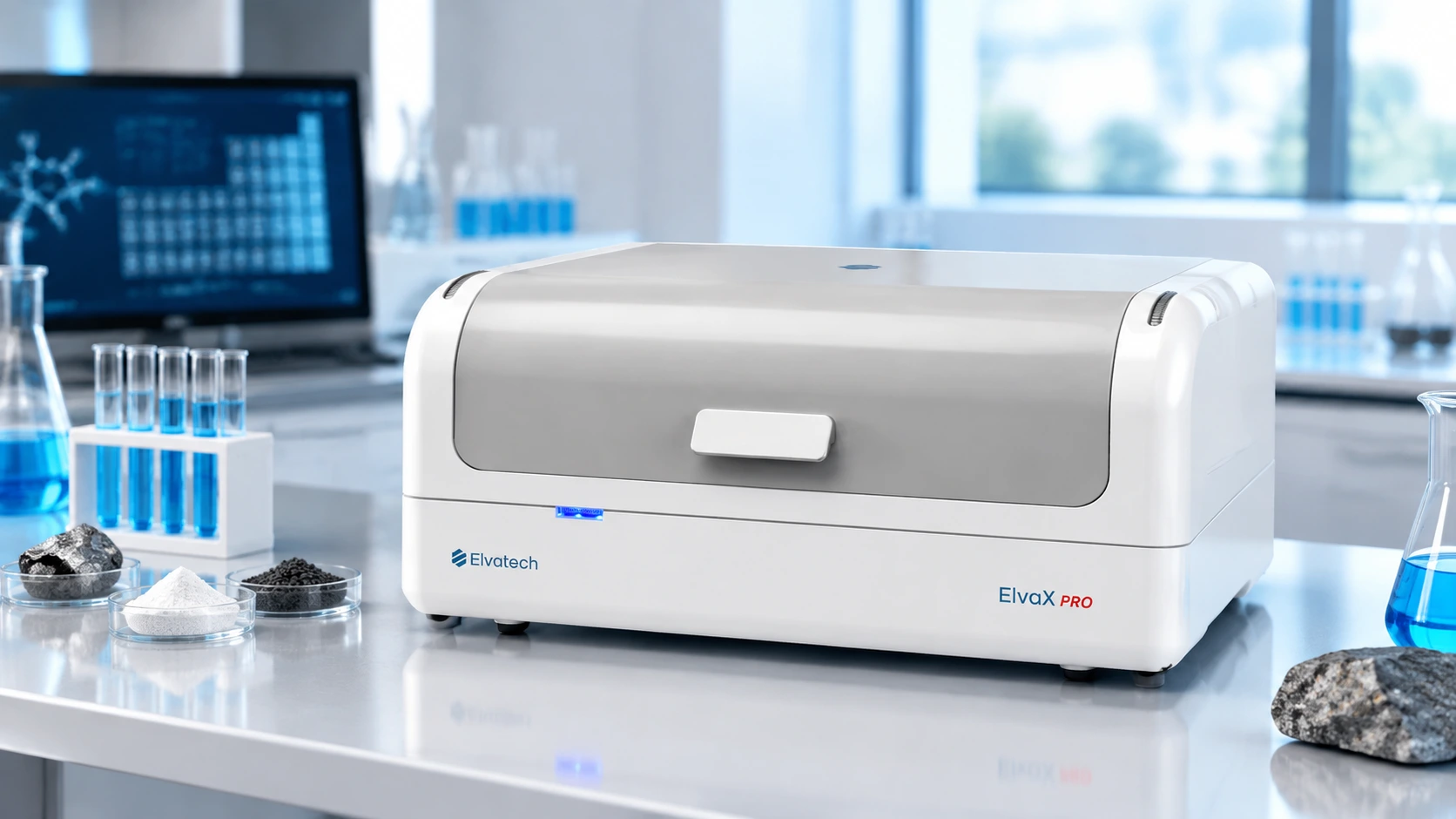
Energy Dispersive X-ray Fluorescence (EDXRF) is one of the widely used techniques for total sulfur analysis in petroleum products.
In an EDXRF sulfur analyzer, X-rays interact with the sample and cause characteristic fluorescent X-rays to be emitted. The instrument measures the sulfur-specific signal and uses calibration data to determine the sulfur concentration.
One of the major advantages of EDXRF is that it can provide rapid analysis with relatively little sample preparation.
ASTM D4294
ASTM D4294 is the standard test method for determining total sulfur in petroleum and petroleum products by energy dispersive X-ray fluorescence spectrometry.
The current ASTM D4294-24 method covers a broad range of petroleum products and reports a typical analysis time of approximately 1 to 5 minutes per sample.
The method’s stated interlaboratory scope extends from approximately 17 mg/kg to 4.6% sulfur by mass, although the actual applicable detection and quantification capability depends on the instrument and sample.
Advantages of EDXRF
EDXRF is attractive for petroleum laboratories because it can offer:
- Rapid analysis
- Minimal sample preparation
- Non-destructive measurement
- Good repeatability
- Suitable analysis across a wide concentration range
- Convenient routine testing
However, accurate results depend on suitable calibration and controlling matrix differences between standards and samples. ASTM specifically highlights matrix matching as an important consideration when applying D4294.
2. Wavelength Dispersive X-ray Fluorescence (WDXRF)
Wavelength Dispersive X-ray Fluorescence (WDXRF) is another established XRF technique for sulfur determination.
Instead of measuring the emitted X-rays primarily according to their energy, WDXRF separates characteristic wavelengths before detection.
ASTM D2622 is the standard test method for sulfur in petroleum products using wavelength dispersive X-ray fluorescence spectrometry. It covers products such as diesel, jet fuel, kerosene, naphtha, residual oil, lubricating base oil, hydraulic oil, crude oil, gasoline, gasoline-ethanol blends, and biodiesel.
ASTM D2622-26 specifies a typical analysis time of around 1 to 2 minutes per sample and a stated method range from a calculated limit of quantitation of approximately 3 mg/kg up to 4.6% sulfur by mass, subject to the method’s conditions and instrument capability.
WDXRF can therefore be useful when laboratories require sensitive and precise sulfur measurement and have the appropriate instrumentation and calibration procedures.
3. Ultraviolet Fluorescence (UVF)
Ultraviolet Fluorescence is another important technique for total sulfur analysis, particularly for low sulfur concentrations.
In a typical UV fluorescence method, the sample is converted through a high-temperature combustion process. Sulfur-containing compounds are converted into sulfur oxides, and the resulting gases are exposed to ultraviolet radiation. The fluorescence generated is measured and related to the sulfur concentration.
ASTM D5453 is an established method for determining total sulfur in light hydrocarbons, spark-ignition engine fuel, diesel engine fuel, and engine oil by ultraviolet fluorescence.
UV fluorescence can be particularly useful when laboratories need low-level sulfur measurement and the applicable standard specifies this technique.
4. Combustion-Based Sulfur Analysis
Combustion-based elemental analysis is another approach used for sulfur determination.
The sample is combusted at high temperature, converting sulfur into sulfur-containing gaseous compounds. These gases can then be detected using an appropriate detector, such as infrared detection, depending on the instrument configuration.
Combustion-based methods can be useful when laboratories need elemental sulfur measurement across petroleum, fuel, geological, or other materials.
Apex Instrument’s petroleum-testing portfolio includes combustion elemental analyzers for sulfur as well as low-level sulfur analyzers.
How Does an XRF Sulfur Analyzer Work?
An XRF sulfur analyzer follows a relatively straightforward measurement process.
Step 1: Sample Introduction
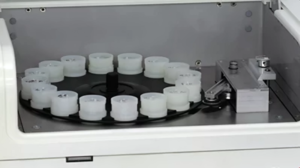
A representative petroleum sample is placed into a suitable sample cup or measurement container.
For many liquid petroleum samples, extensive chemical digestion is not required for XRF sulfur analysis.
Step 2: X-ray Excitation
The instrument directs X-rays toward the sample.
The sulfur atoms respond by emitting characteristic fluorescent X-rays.
Step 3: Detection
The detector measures the sulfur-specific X-ray signal.
Step 4: Calibration
The measured signal is compared against calibration standards with known sulfur concentrations.
Step 5: Result
The instrument calculates and displays the sulfur concentration, commonly reported in units such as ppm or mass percent depending on the application.
This relatively simple workflow is one reason XRF is widely considered for routine petroleum sulfur testing. ASTM D4294 describes the technique as providing rapid and precise total sulfur measurement with minimal sample preparation.
Applications of Sulfur Analysis in the Petroleum Industry
Sulfur testing is not limited to finished fuel inspection. It can support several stages of the petroleum value chain.
Crude Oil Testing
Different crude oils contain different concentrations and forms of sulfur. Measuring sulfur helps characterize crude feedstock and can support refinery planning and processing decisions.
Refinery Process Monitoring
Sulfur analysis can be used to monitor intermediate streams and evaluate sulfur removal during refining. This can help refinery laboratories verify whether processing is achieving the intended sulfur reduction.
Gasoline and Diesel Testing
Fuel manufacturers and laboratories routinely test gasoline and diesel to verify sulfur content against applicable product specifications. Because sulfur limits can be very low for certain fuels, selecting a suitable analytical method and instrument is essential.
Aviation Fuel Testing
Jet fuel and aviation turbine fuel can also require sulfur analysis as part of broader fuel quality testing. The selected test method depends on the applicable specification and laboratory procedure.
Lubricant and Base Oil Testing
Sulfur measurement can also be relevant for lubricating oils and base oils. Understanding elemental composition can support quality control and product characterization.
Biofuel Testing
Some sulfur analysis methods can also be applied to biodiesel and other alternative fuel blends. ASTM D4294 specifically includes biodiesel within its scope, subject to the method’s conditions.
What Factors Affect Sulfur Analysis Accuracy?
Choosing the right analyzer is only one part of obtaining reliable sulfur results.
Sample Homogeneity
The sample must be representative of the material being tested. Poor sampling or insufficient mixing can produce results that do not accurately represent the product.
Calibration Standards
Calibration standards should be appropriate for the expected sulfur concentration and sample matrix.
Matrix Effects
Petroleum products can have different carbon-to-hydrogen ratios, oxygen content, and other compositional differences. These differences can influence XRF measurements.
ASTM D4294 specifically notes that standards and samples should have appropriately matched matrices or that matrix differences should be accounted for.
Sample Volatility
Highly volatile samples can present additional challenges. ASTM notes that volatile samples such as high-vapor-pressure gasoline or light hydrocarbons may experience selective loss of lighter components during analysis, potentially affecting precision.
Detection Requirements
A method suitable for percentage-level sulfur may not be appropriate when the laboratory needs to measure sulfur at very low ppm levels.
Therefore, laboratories should consider the expected concentration range and required limit of quantification before selecting an analyzer.
How to Choose the Right Sulfur Analyzer
When selecting a sulfur analyzer for petroleum testing, laboratories should consider:
- Type of petroleum products being tested
- Expected sulfur concentration
- Required detection or quantification limit
- Applicable ASTM or other test method
- Required analysis time
- Number of samples tested daily
- Sample preparation requirements
- Calibration requirements
- Matrix differences between samples
- Software and data reporting capabilities
- Maintenance and technical support
- Laboratory space and operating requirements
For example, a laboratory performing routine total sulfur testing across gasoline, diesel, crude oil, and lubricants may consider an EDXRF system designed around ASTM D4294. A laboratory focused on very low sulfur concentrations may need a technique specifically suited to trace-level measurement, such as an appropriate UV fluorescence or specialized low-level sulfur analyzer.
EDXRF vs. UV Fluorescence: Which Is Better?
There is no single technique that is best for every petroleum sulfur application.
EDXRF can be a strong choice for routine total sulfur analysis when rapid testing and minimal sample preparation are priorities. ASTM D4294 is specifically designed for total sulfur measurement in a broad range of petroleum products.
UV fluorescence can be advantageous for applications requiring very low sulfur measurements and where the applicable standard specifies or supports the technique.
The decision should therefore be based on the required sulfur range, sample type, applicable test method, laboratory throughput, and required analytical performance.
Key Takeaways
Sulfur analysis is an important part of petroleum product testing. It supports fuel quality control, refinery process monitoring, regulatory compliance, and efforts to reduce sulfur-related emissions.
EDXRF, WDXRF, UV fluorescence, and combustion-based techniques all have roles in sulfur analysis, but their suitability varies according to the sample and analytical requirements.
For routine petroleum testing, XRF-based methods such as ASTM D4294 and ASTM D2622 offer established approaches for determining total sulfur in a wide range of petroleum products.
The most suitable sulfur analyzer is ultimately the one that matches the laboratory’s required concentration range, product types, applicable testing standards, throughput, and accuracy requirements.
Frequently Asked Questions
Contact:
Contact us to improve refinery testing with advanced ICP-MS solutions and get a quote today.
Mobile/WhatsApp: +971526191767
Email: sales@apex-instrument.com